July 8, 2026·Aesthetic Study
Jeweled Mundane
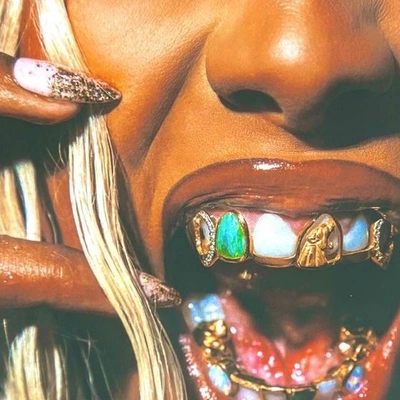
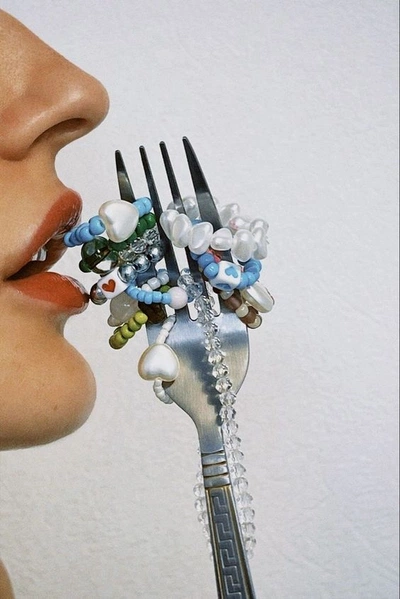
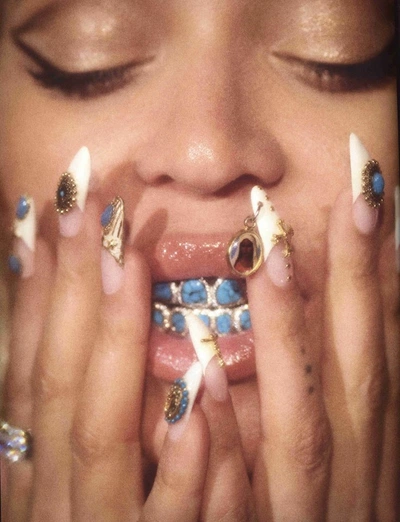
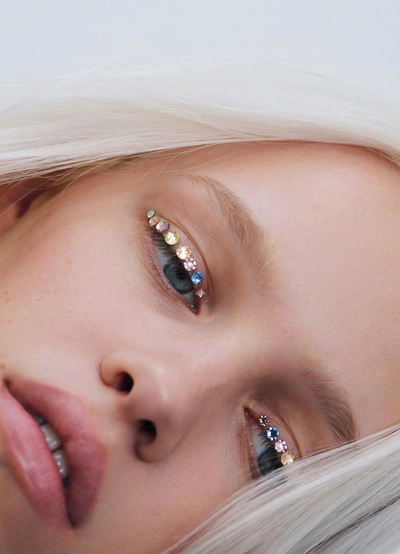
Bling is creeping onto every surface, from teeth to mug handles to toe rings, and the maximalist glint is calling time on millennial grey.
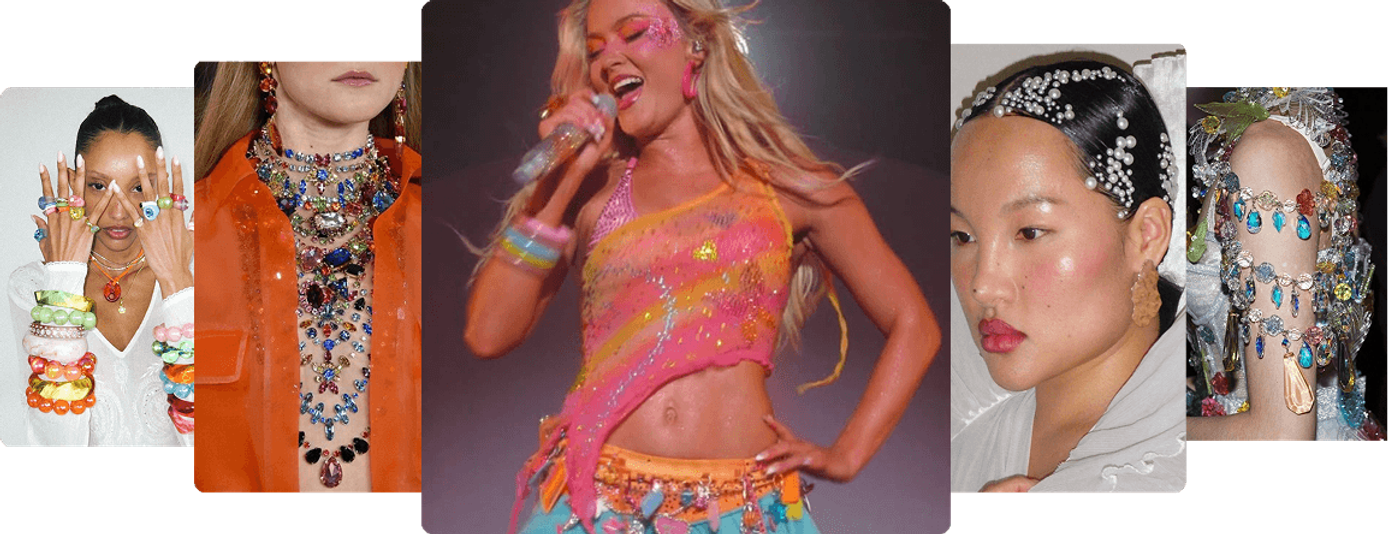
Ornaments used to need occasions. In the smartphone era, every day is one. That means gala-level gems kind of feel right at home anywhere: on a front tooth, on the handle for a mug, the hair tie in a messy bun. Dua Lipa, Kylie Jenner, and Sabrina Carpenter keep turning up in bedazzled nails; toe rings now come set with stones worth more than the sandal. And if the glint in our eyes is to be trusted, it might mark the end of millennial grey.
In 1908, Adolf Loos called ornament on useful objects a crime. Smooth and plain, he believed, meant civilization was moving forward. But history proves bling can’t be repressed. Eddie Plein was carving gold fronts in a Brooklyn basement for a teenage Jay-Z decades ago, remaking one grill three times so his client could close his lips over ten diamonds the size of engagement rocks. From India’s gold to the Black salons that built nail culture, ornament has always found its way back. All the world’s a stage, and it’s our time to shine.
- The architect who called ornament a crime in 1908
- How algorithms flattened taste into a default grey
- The underground history of grillz, from the man who invented the gold front
- Gen Z is using archival maximalism to kill the clean-girl aesthetic