An animated movie is winning the box office in China because of how bad it is. Niu Lai made $1,146 its first ten days, then went viral and cleared 11.4 million, with fans praising its hilariously rough look as “serious craftsmanship.” The whole thing proves that technology could never replace the charm of botched human error.
Erin Magee left Supreme for SKIMS. After 22 years shaping Supreme, she’s now Chief Design Officer at Kim Kardashian’s shapewear label. Does this mean the hypebeasts will start camping out for nipple bras?
Chinese robot beats Usain Bolt’s 100m dash record. A humanoid called Lightning clocked 9.32 seconds, beating Bolt’s 9.58 record from 2009. But Usain can still pass a CAPTCHA test, which is more than the robot can say.
Brussels covered its Grand-Place in 750,000 dahlias. The flower carpet ran 14,000 square feet as Hiro Sugiyama’s take on Hokusai’s “Great Wave,” marking 160 years of Belgium-Japan friendship. It was up for four days, then the flowers went to compost.
Apple’s foldable iPhone is almost real. The rumored “iPhone Ultra” opens like a book into a 7.8-inch screen and is expected to run about $2k in September. Just when you thought Y2K nostalgia was over, they reinvented the flip phone.
LinkedIn has accidentally become a dating app. Singles are reportedly using its headshots and job histories to vet dates and slide into DMs. People hated dating apps so much they fled to a website they hate even more.
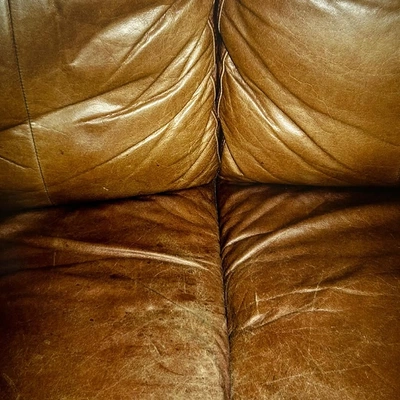
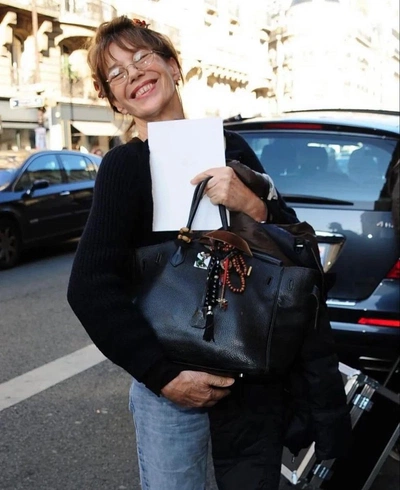
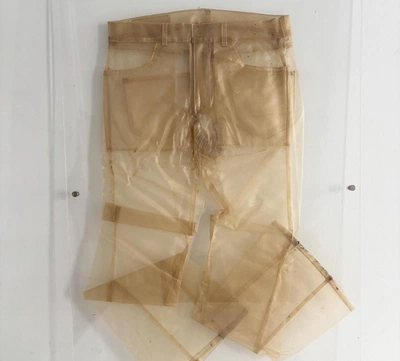
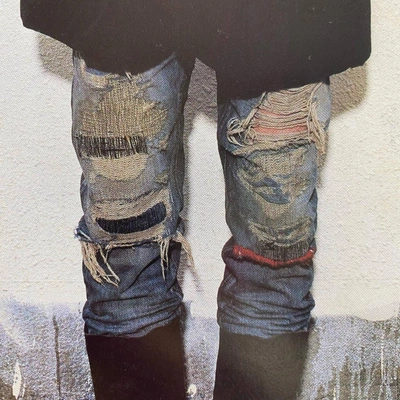
The culture is once again in a phase where everything looks worn. There are pre-scuffed sneakers, new wall mirrors “antiqued” to look ancient, phone photos run through filters until they look like light-leaked disposables from 2003. But looking old is nothing new. In Japan, craftsmen mended broken tea bowls with gold — a practice called kintsugi. The Romans copied and aged Greek statues. Even Michelangelo faked an ancient sculpture to pass it off as old.
When taste gets so expensive it can start to feel cheap, well-worn items go up in stock. After all, items that are lived-in feel a touch more authentic. Of course, the brands immediately catch up. Balenciaga sells pre-destroyed sneakers, Prada makes stains and iron-burns look couture, and furniture makers sell reclaimed-wood tables already scratched and scarred. When any image can be generated on demand, the marks of age are the marks of “real.”
The Belgian eye behind a viral concrete house, now shooting for GUBI and Rimowa and casting his own concrete home objects.
A moment with
Pieter Peulen
The Belgian eye behind a viral concrete house, now shooting for GUBI and Rimowa and casting his own concrete home objects.
Pieter Peulen built his own house out of concrete and never stopped rethinking it. It sits in the Belgian countryside, all raw poured surfaces warmed with wood and vintage finds. He trained as an interior and furniture designer, then moved into photography. When photos of the house went viral, his following took off, and he now shoots for brands like GUBI and Rimowa. Lately he’s been making his own concrete home objects — the first, a burnboard, is out now, with more coming later this year. Here he talks Belgian modernism, his favorite Lemaire bag, and why the countryside beats the city for building your own little blue zone.
10AM Lofts, Athens. The first time I visited Greece, I spent the summer exploring Athens. It’s an incredibly inspiring city in itself, but staying somewhere inspiring makes the experience even more special. The space feels beautifully curated, spacious and dynamic. It gave me room to slow down, take everything in and see the city from a different perspective.
Next is Axel Vervoordt Gallery. Axel is one of Belgium’s most influential interior designers, collectors and art dealers. Many of the spaces he has created are abroad or not open to the public, but visiting his gallery offers a rare opportunity to step into his world.
Café Service is one of my more recent discoveries in Antwerp, and I’ve already returned several times. You can immediately sense when a restaurant is authentic and born from genuine passion. The atmosphere, food and attention to detail all feel sincere and effortless, which makes it a place I keep wanting to revisit.
What's your hot take?
Being in a city can be inspiring but nothing beats living on the outskirts and creating your own little blue zone. In the end, being in your own bubble will give you the place to experiment with failure and success as result.
What’s an item you can’t live without?
It's the item that holds all of my items I can't live without: my Lemaire Croissant bag.
Who is your forever inspo?
Belgian modernist architects, especially Renaat Braem, Léon Stynen and Juliaan Lampens. I feel Belgian modernism is still very underrated. Their work has such a distinctive visual language that, once you become familiar with it, you start recognizing it everywhere. I’m particularly inspired by their bold use of concrete, strong geometry and the way they balance monumentality with warmth and simplicity.
What’s something you can’t stop thinking about?
My next sweet treat, always and everywhere thinking of this.
Yeeun Jang runs a floral studio in Seoul, building big flower installations for brands and sculptures like this one, usually in artificial blooms so they hold their shape long after fresh ones would brown. Her Lily Bag is made from hundreds of pale blue lilies, each placed individually over a hidden metal frame.
The Lily Bag stands out because it inverts the bag trend we’ve seen over the past few seasons. JW Anderson made a clutch that looks like a pigeon. Staud made one shaped like a fish. But Jang does the opposite. Instead of making a bag look like an object, she takes objects (in this case, a pile of flowers) and makes them look like a bag. In doing so, she’s made something that looks less like a gag or a novelty, and more like a work of art.