June 9, 2026·Aesthetic Study
Trompe l'Oeil
The old art of fooling the eye has given way to clothes that openly announce they’re faking it.
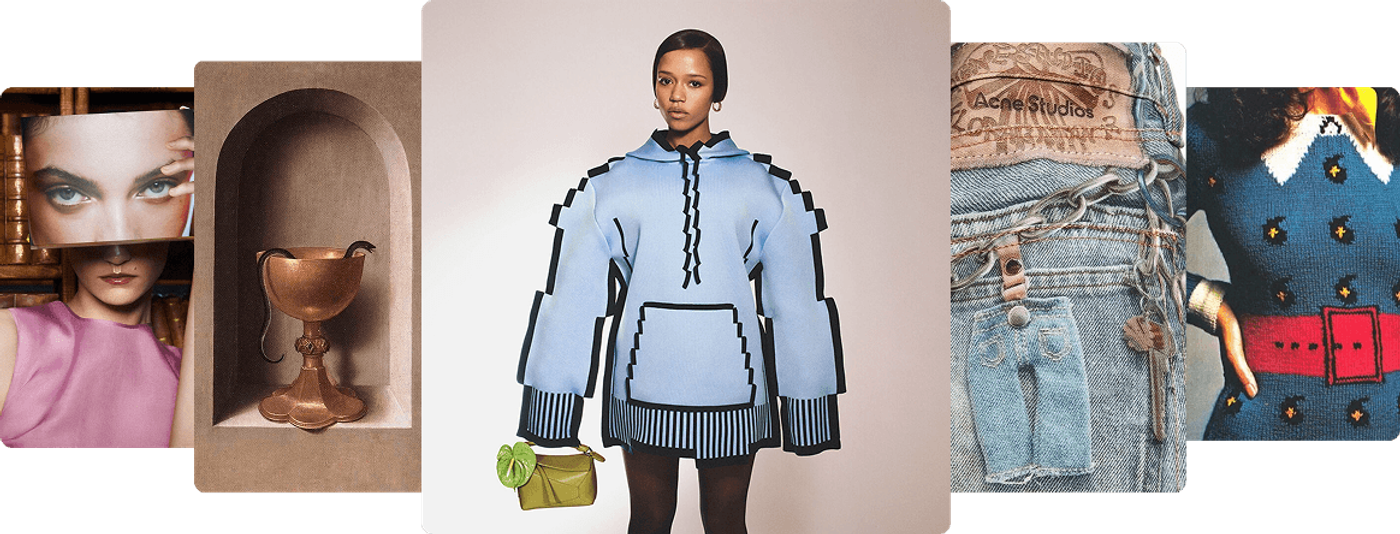
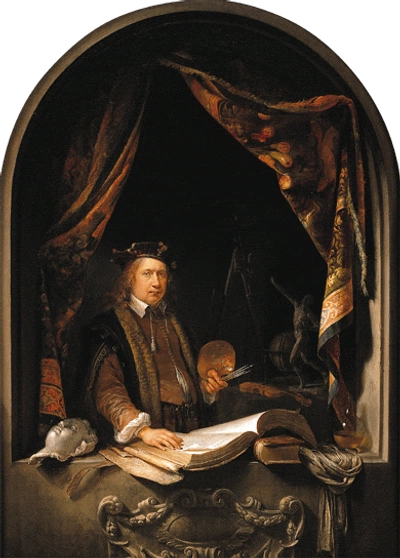
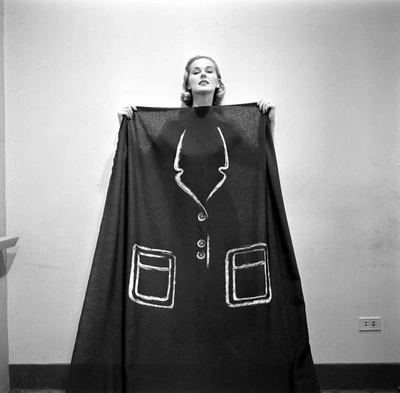
When Gerrit Dou painted a curtain in 17th-century Leiden, the goal was for the viewer to try to pull it aside. Trompe l’oeil was the ultimate painterly skill, where a painter’s genius was measured by how easily they could make you confused. Schiaparelli brought the same logic to fashion in 1927 with a knitted bow that looked tied at the chest. For decades the trick held — Gaultier’s printed torsos, Galliano’s layered denim at Dior, Louis Vuitton’s ankle boot hand-painted to look like pumps with a white sock. Deception as craft.
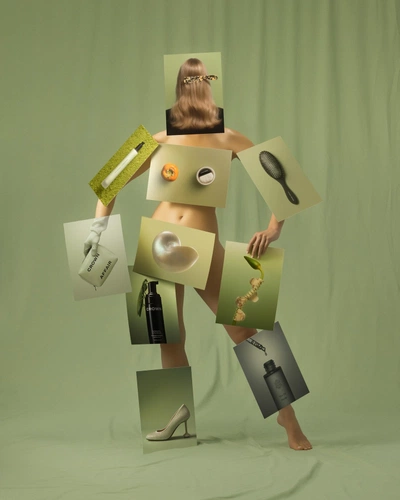
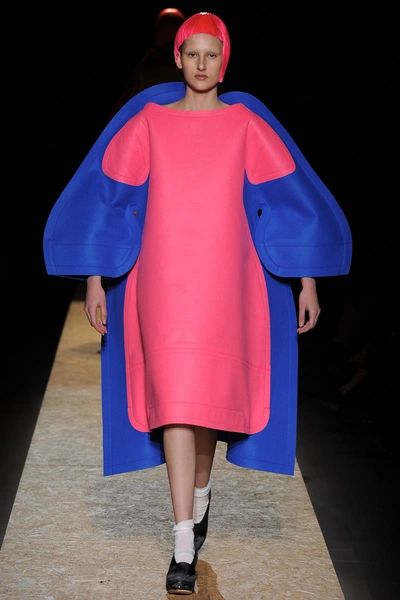
But modern-day trompe l’oeil has become traître l’oeil, or betray the eye. Instead of trying to fool you, the illusion immediately sabotages itself. Loewe sent out a pixelated polo that looked yanked from a loading screen. Prada knitted fake cardigans onto shirts, then Miuccia told the press: “We played with fake, not with fiction.” Acne stamped keychains onto denim. Ottolinger printed a full shirt-and-tie onto a bodysuit. In the era of AI, the most comforting illusion is the one that proudly admits it is a lie.
- Trace a century of fashion illusion
- Follow trompe l’oeil from the ’20s to now
- Gerrit Dou’s virtuosity in Dutch collections
- Menswear’s current surrealist spin