May 26, 2026·Aesthetic Study
Biomorphic Core
A century after Haeckel’s sea creatures, designers are still growing their work from nature’s shapes.
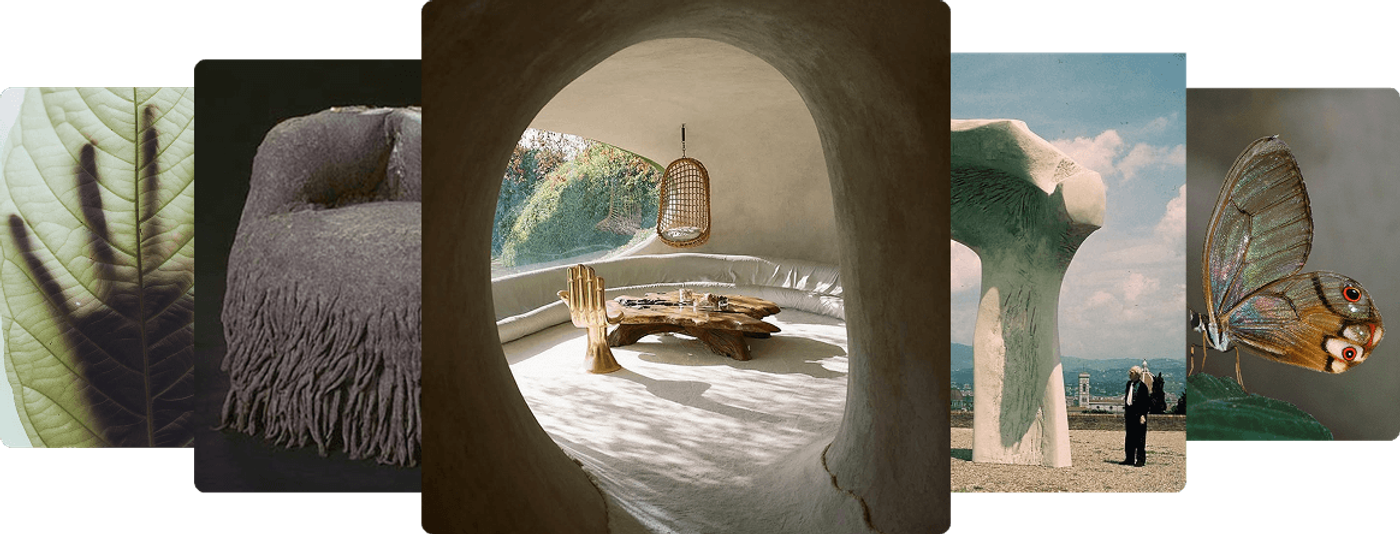
Before it was design, it could be seen in a sea creature. Ernst Haeckel's Art Forms in Nature — a 1904 collection of radiolarian and jellyfish illustrations so precise they look like blueprints — handed designers a visual language they're still working from. Gaudí built facades from bone structure and root systems. Marc Newson's Lockheed Lounge looks like a femur crossed with a spacecraft. Iris van Herpen's retrospective at the Brooklyn Museum makes the case that a dress can grow, looking less like clothes and more like coral mid-bloom.
These things look connected because, well, everything is. The brain responds to organic curves differently than it does to right angles. It’s deep in our DNA, having spent most of human history in forests and tide pools rather than office buildings. A chair that looks like a bone, a dress that looks like coral, a building with no corners: they all feel, on some level, like something you already know.
- Gaudí's genius was transferring nature directly into architecture
- No straight lines: the building that made parametricism click
- Where biomorphic architecture comes from and where it's going
- The dress that was literally grown from mushrooms
More from Sequence
Dirty Dressing
Clean dressing is meeting its opposite, with designers staining and bog-soaking fabric to let the earth back in.
The Nancy Meyers Fantasy
The most copied kitchen of all time is a film set, and the real thing people want is the unbuyable feeling of a life lived slowly.