July 14, 2026·Aesthetic Study
Hoof Mode
Fashion’s strangest shoe got copied into oblivion, and now it just means you’re online.
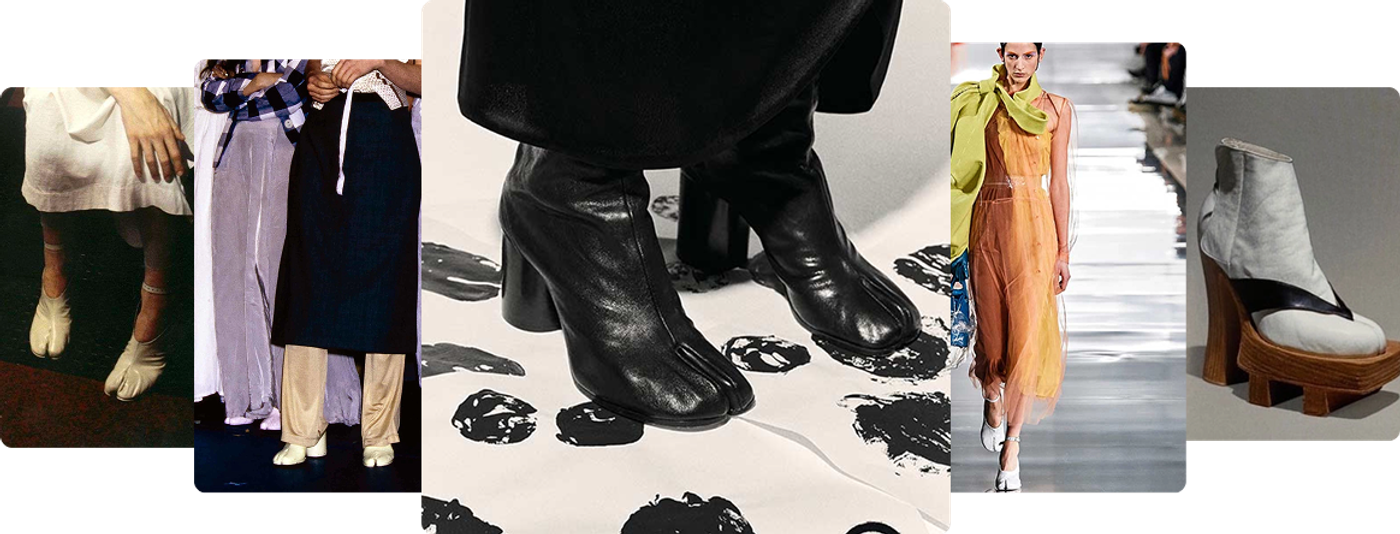
The tabi was fashion’s best-kept secret, except everyone’s in on it now. Nike’s Air Rift revived through a Skims collab, Valentino’s peep-toe Révélé pump, Margiela dupes shipping from Shein in three days. It’s a long way from where it started — a 15th-century Japanese sock split to grip a sandal thong, turned into a rubber-soled work boot by the founders of Bridgestone, then dipped in red paint by Martin Margiela in 1988 so the hoofprints stained his runway. He called it an “invisible” shoe. Everyone else spent the next three decades arguing whether the split toe was chic or just a horse hoof.
The silhouette hasn’t really changed since. Our perception has. What once looked alien has been absorbed into the fashion canon, copied endlessly until the split toe barely registers as strange. And ironically, many of the proudest wearers are the same terminally online crowd forever posting about AI slop, algorithmic sameness, and the death of taste — all walking around in the same weird shoe. A cloven hoof has become less a provocation than a signal that you read the group chat. Part high art, part bovine cosplay. But an inside joke stops working once everyone’s in on it, and the only question left is how much uglier the next so-bad-it’s-good revival will have to be.
- The invisible shoe Margiela built because he couldn’t afford a new one
- 15th-century socks to celebrity staple: the full tabi lineage
- Why 2026 belongs to the ugly, gross, gloriously weird shoe
- How to actually style a divisive split toe


More from Sequence