September 1, 2026·Aesthetic Study
Goth Baddie
How "goth" got flattened into a beauty trend, and why that might actually be good for real goths.

Last month, Drake met cosplayer Pinkchyu during a livestream. Wearing pale makeup, a jet-black wig, and a spiked choker, she introduced herself by opening a pack of Magic cards. She got him to bark, called him a good boy, and got him to promise to buy her mom a house. The clip cleared 23 million views, and she posted, “I’m the goth baddie.”
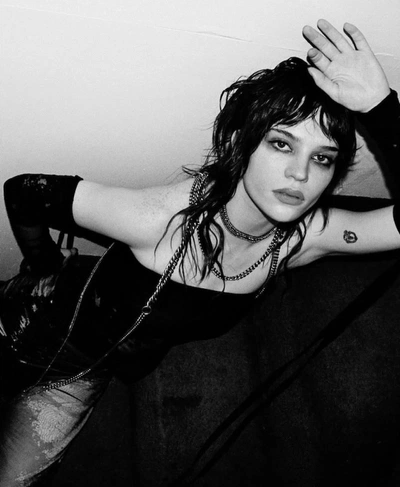
She’s not the first. Anyone who looks even lightly alt has been bequeathed the phrase, from black-haired e-girls to actresses to even Bryan Johnson’s girlfriend. Sure, most of these goth baddies likely can’t explain the difference between early-‘80s post-punk and deathrock. But that doesn’t mean they don’t exist.
This is just how subcultures work. Punk aesthetics made way for SuicideGirls, Hot Topic, and Avril Lavigne. Emo evolved into Emo Nite, a touring DJ party where grown adults sing along to non-emo artists like Linkin Park and Evanescence. “Goth” has already been reduced to a suffix that means “alt,” used on terms like beach goth, health goth, and “dinergoth,” whatever that is.
If anything, the rise of the goth baddie is a gift. Real goths can respond by digging deeper and updating their uniform. And the goth baddie, under scrutiny right now, can develop her look — pleather, black lipstick, white facepaint, no tattoos — in preparation for the inevitable goth baddie fashion revival of 2046.
- Why the word “aesthetic” is bad for subcultures
- Get to know real goth music
- Drake has been into goths since Degrassi
- Goths argue the difference between post-punk and deathrock