ExploreSequenceShopCareers
Try
'vitsoe shelving'
Log in
Sign up

Sequence is read by 4 million creatives every week

Join Cosmos to get Sequence in your inbox

Get the app

© 2026

ConnectInstagramTikTokX
MoreTermsPrivacy

© 2026

CareersTermsPrivacy

April 8, 2026·Edition 19

Blue Zones. White 'phones. Styles' tones.

Internet Microdoses

The NYT unmasks Satoshi Nakamoto, the pseudonymous inventor of Bitcoin. John Carreyrou used AI-assisted stylometric analysis to narrow 34,000 suspects to one: Adam Back, the cryptographer who invented the proof-of-work system Bitcoin runs on. Back denies it, but if it’s true, he’s been sitting on $170 billion for fifteen years and pretending otherwise.

Harry Styles has impeccable music taste. His curated Meltdown fest lineup is a who’s who of heady artists from the past four decades of fringe music: electronic pioneer Beverly Glenn-Copeland, jazz legend Mulatu Astatke, ambient great Jon Hopkins sit alongside Dev Hynes and James Murphy. It’s a lineup that’s less pop star, more crate-digger.

LACMA just opened a $724 million extension. The David Geffen Galleries stretch 900 feet across Wilshire Boulevard. Inside, the art is organized not by era but by bodies of water: Mediterranean, Atlantic, Indian, Pacific. After a decade of delays, the building makes a strong case it was worth the wait.

Pedro Pascal is Chanel’s latest ambassador. Their partnership soft-launched at the Oscars, but Monday’s Instagram post made it official. It’s a match made in heaven: Pascal is one of Hollywood’s most in-demand actors, and under creative director Matthieu Blazy, Chanel is the house that deserves him.

Sotheby’s is selling 300+ vintage Cartier watches at a historic auction. The collection took 25 years to assemble and expects to haul in $15 million. Meanwhile, the modern-day luxury watch market is entering a projected 10-year slump. It’s true of everything, but watches especially — the best things stand the test of time.

Kelly Akashi rebuilt her fire-destroyed chimney in glass for the Whitney Biennial. When the LA-based artist lost her Altadena home in the Eaton Fire in January 2025, the chimney was the only thing left standing. She reconstructed it in luminous cast glass, and reminded us that there’s untold power in rebuilding.

More from Sequence

Diamonds crash. Luddites win.
Edition 18 · April 1, 2026

Diamonds crash. Luddites win.

Sora dies. Dalí lives. The dynasties talk.
Edition 17 · March 24, 2026

Sora dies. Dalí lives. The dynasties talk.

Aesthetic Study

The New Luddites

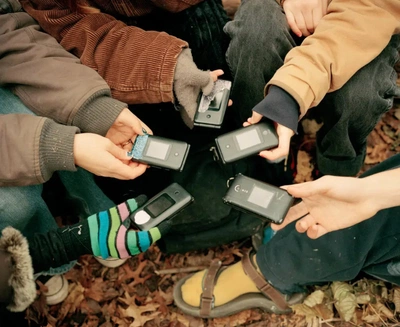
The original Luddites weren’t anti-technology — they were textile workers in 1811 who smashed the machines that threatened their livelihoods and craft. Two centuries later, similar problems result in a similar resistance: Brooklyn teens are founding Luddite Clubs built around flip phones and Prospect Park reading circles. The Light Phone III just launched the waitlist for its third-generation dumbphone. Meanwhile “naive design” — hand-drawn, deliberately imperfect visuals — is one of the defining graphic trends of 2026.

There’s a look, too. In Oaxaca, the Du Xhil cooperative is reviving backstrap loom weaving with natural indigo and cochineal dyes. Bode is building a whole label on deadstock fabrics, hand-quilting, and trims pulled from antique button jars. 11.11/eleven eleven dyes everything with plant-based pigments. At Paris Haute Couture last year, Vaishali Shadangule’s Kintsugi collection made mending the entire point. There’s a common palette: clay, indigo, walnut, unbleached cotton. The New Luddites are online. They just want the things they love to outlast the algorithm.

  • Read Vogue’s Anti-AI Slop Playbook
  • Why digital detoxes can’t be cold turkey
  • Why it’s fun to be frustrated by analog tech
  • How sashiko is threading through fashion
Cover of The New Luddites collection
The New LudditesBy @cosmos
An image uploaded by unavailable on Dec 02, 2024.
An image uploaded by WM on Jan 11, 2024.

April 8, 2026·Interview

Nik Arthur

The animator who engraves into stone and shapes light on Ted Chiang, mechanical pencils, and volunteering on farms in Japan.

Nik Arthur
Nik Arthur

A moment with

Nik Arthur

The animator who engraves into stone and shapes light on Ted Chiang, mechanical pencils, and volunteering on farms in Japan.

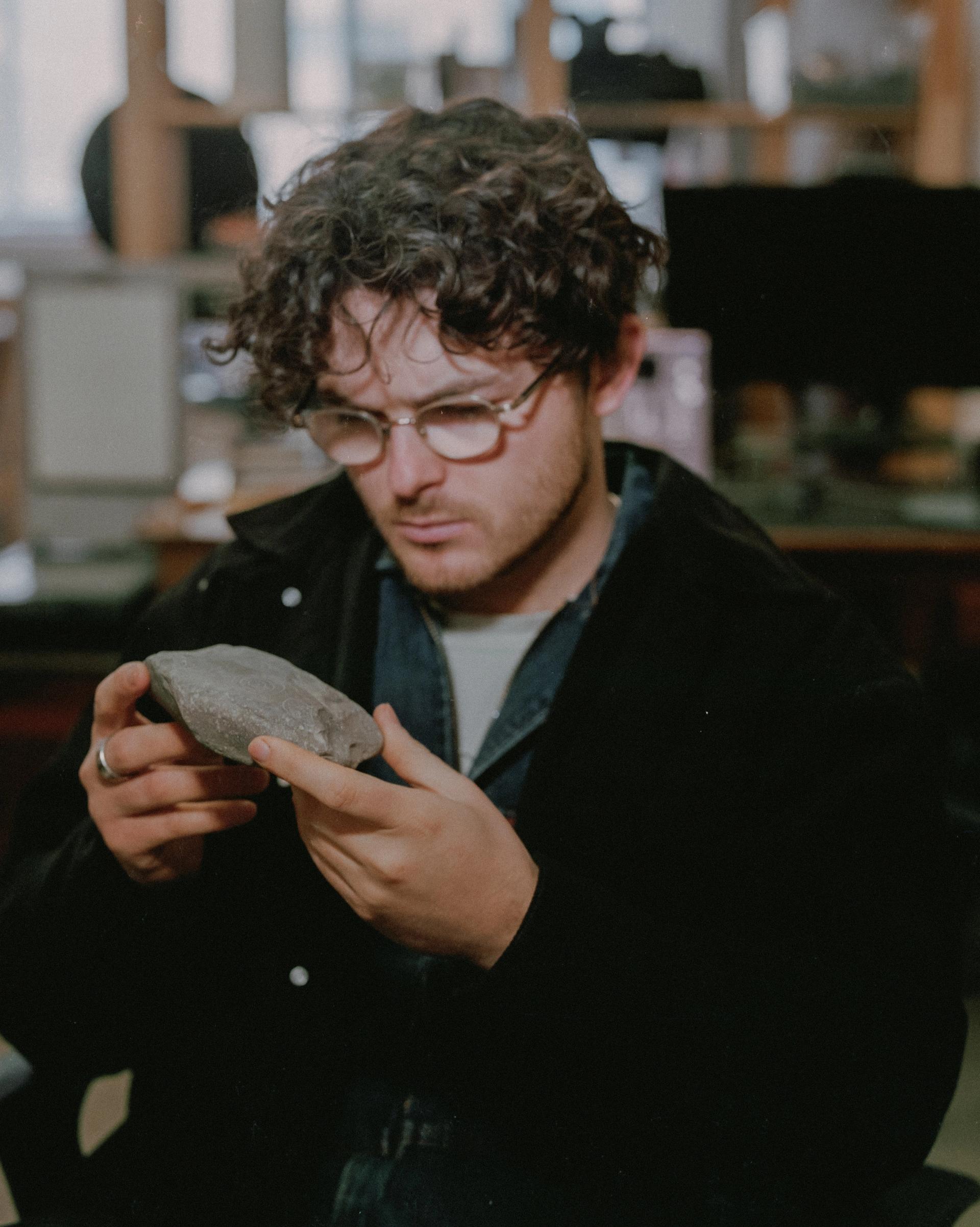
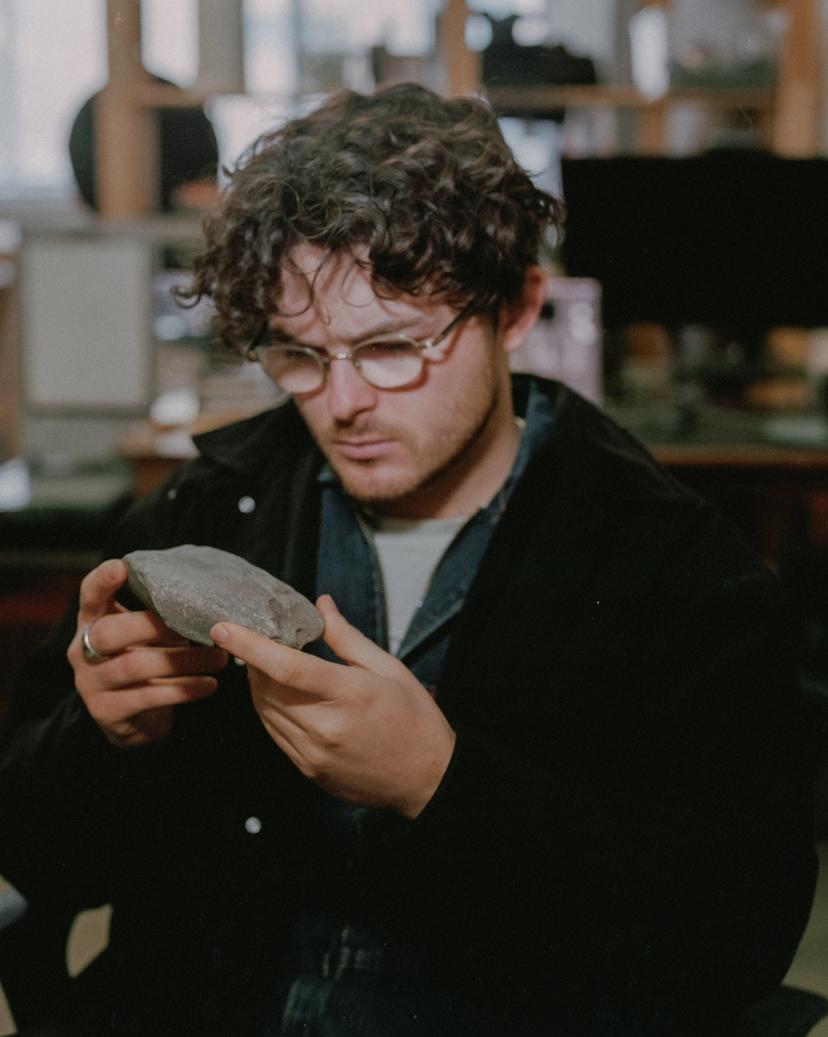
Nik Arthur is a Montreal-based animation director who has worked with YouTube, Vice, and Psycho Films — but his own projects don’t look anything like that work. His Organima series is animated by the likes of engraving directly into stone with a rotary drill, rearranging the skin on a leaf skeleton, or carefully shaping refracted light. He’s currently writing a new film about a very smart splash of water. We collaborated with Nik in our recent film (and you can watch the BTS on our Instagram). Below, he talks Ted Chiang, mechanical pencils, and his other life volunteering on farms in Japan.

What do you do when you hit a creative block?

I don’t think we need to be in output mode all of the time. When output isn’t feeling natural, I try to intake until output comes naturally. Usually through talking, reading, and watching.

What’s the worst recommendation someone’s given you?

Post more on Instagram.

What’s the last film you watched that moved you deeply?

Cave of Forgotten Dreams by Werner Herzog… absolutely mind-boggling.

What book have you gifted most?

Stories Of Your Life And Others by Ted Chiang.

What’s something you bought under $100 that changed your life?

I bought this nice, metal, kind of heavy mechanical pencil for like $15 that helped me love to write things down again.

Where do you go to find peace?

There’s this town in Japan that I visit sometimes to farm mulberry and help at a family-run paper mill.

Who is your forever inspo?

My partner.

What’s the last article you sent to a friend?

“Why Science Fiction Can’t Predict the Future — and Why That’s a Good Thing”

What’s the best investment (money, time, habit) you’ve made?

Learning a new language.

Write us a fortune cookie.

You are in control of your sense of time.

Follow Nik on Instagram and Cosmos.

Object Love

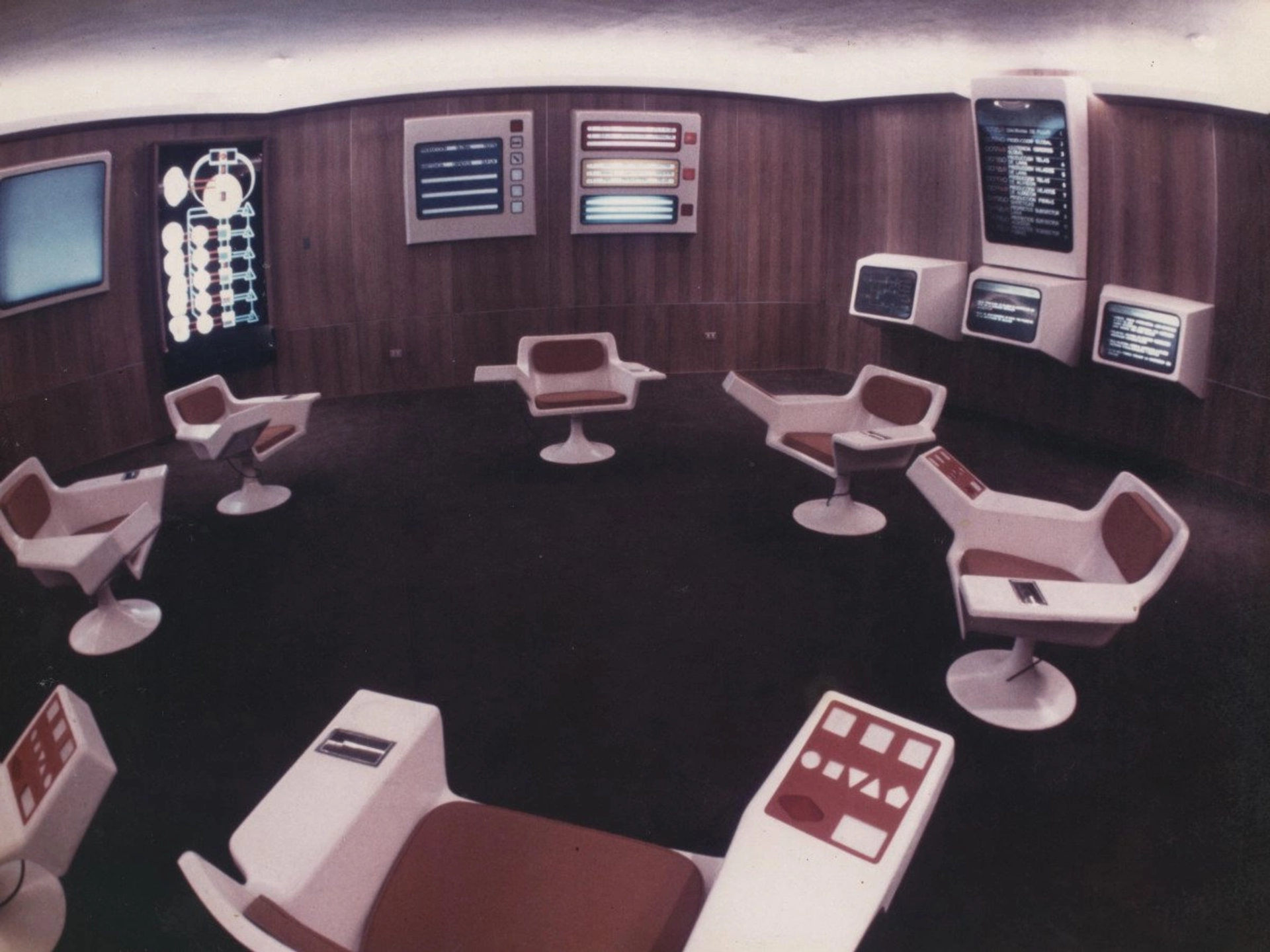
Cybersyn Opsroom Chair

Cybersyn Opsroom Chair

In 1971, Fernando Flores — a 28-year-old government official in Salvador Allende’s administration — recruited British cybernetician Stafford Beer to build a computer network that could manage Chile’s nationalized economy in real time. The result was Project Cybersyn, and its most iconic artifact was the Opsroom: a hexagonal control room with seven white fiberglass swivel chairs designed by a team led by Gui Bonsiepe. There were no keyboards. Instead, they opted for buttons that were embedded in the armrests alongside built-in ashtrays and whiskey-glass holders. The data displays on the walls were designed by hand, then photographed as slides projected from behind — they had more faith in what a human could render than what a mainframe could output.

The Opsroom was destroyed after Pinochet’s coup in September 1973. Only photographs survive. Bonsiepe, who led Chile’s first state-run industrial design group at INTEC, is 92 now. The most beautiful command center ever built for a country that no longer wanted it.

Quick Hits

  • Gen Z is now the biggest moviegoing demographic.
  • Drake teases Iceman album with frozen court-side seats.
  • This screenless phone for kids is a literal Tin Can.
  • Pamela Anderson makes rattan furniture now.
  • Watch your brain rinse itself while you sleep.

Applying SPF,

Tania ☀️

This post was originally sent out to Cosmos members on 04/14/26.