April 28, 2026·Edition 22
A Field Guide to Costume Art
Internet Microdoses
Every first Monday in May, The Met Gala attempts to start a conversation. In 2026, there’s an elephant in the room: Fashion, like everything else, feels like it’s being overrun by tech bros. The Met Gala specifically has been hijacked by Bezos — the honorary chair, the main benefactor, and the face of the protests outside. OpenAI, Meta, and Snap Inc. are buying tables. And celebrities continue to seem okay with it all. It’d make sense to just ignore this edition all together, but there’s still a reason to care.
The arts have always been bankrolled by the ultra-wealthy, but the gala is one of the only annual events that makes taste visible at scale. Once a year, hundreds of people show us theirs on a single carpet, in front of a camera, allowing us all to participate in conversation. The looks pour in. Within minutes, the internet has decided who delivered, who’s chopped, and who missed the assignment. By Tuesday, the discourse has turned into memes, reels, and Substack takes.
The gala was founded in 1948 by publicist Eleanor Lambert as a private fundraiser for the Costume Institute, which had just merged into the Met. For its first three decades, it was a small industry dinner reserved for fashion editors and designers, held off-site. The Met Gala as we remember it in popular culture starts with Anna Wintour, who took over as chair in 1995. In 2003, Tom Ford co-chaired and Gucci sponsored at $3,500 a seat. This year it’s the Bezoses. As Amy Odell put it, “what used to be a closed-door networking event for fashion people is now a big-box clout store for the richest people on the planet.” But the show on the wall isn’t the show on the steps. It’s called Costume Art, and it’s asking more from us than posting about it.

Which should be expected — the brief more conceptual each year. Under Wintour’s chairmanship and Bolton’s curation, themes shifted from designer monographs and national fashion to conceptual provocations. It has gotten harder to just call your stylist and wear something pretty. Bolton names two categories as overlooked: pregnant and aging. From the press preview, the critic Rian Phin noted the show extends further — disabled bodies appear throughout.
This year, the show is foregrounding bodies that fashion has historically refused to design for. Bolton goes on saying, “What connects every curatorial department and what connects every single gallery in the museum is fashion. It’s the common thread throughout the whole museum… Even the nude is never naked.”
If 2026 matches previous years, we can expect the theme to be treated by some as a homework assignment and by others as a costume suggestion. In 2006, Sarah Jessica Parker arrived at AngloMania in custom Alexander McQueen tartan, with McQueen himself as her date. Rihanna arrived in 2018 in papal Margiela, styled to be revered. Solange’s 2018 Iris van Herpen halo turned the head Catholic. Doja Cat arrived in 2023 transformed into Choupette, Lagerfeld’s cat. Initially treated as a joke, the look held up because it took the theme more literally than anyone else. They got it. Tonight will tell us who else does.

For the first time, the Costume Institute isn’t reaching outside the building — the 200 artworks paired with the 200 garments are pulled directly from the Met’s permanent collection, spanning 5,000 years. This year there are no eras, designers, or countries that divide the garments. Instead, the show organizes them by what kind of body wears them: Naked, Classical, Pregnant, Aging, Anatomical, and Mortal.
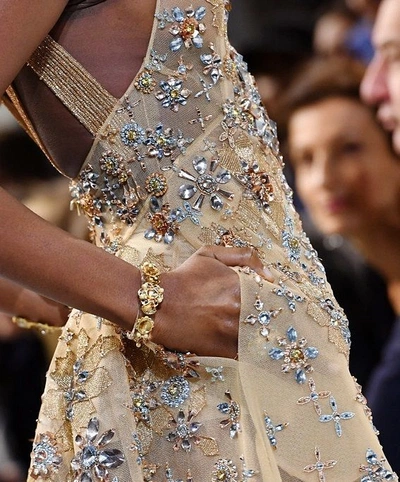
The dress code’s stated purpose is to invite guests to “express their own relationship to fashion as an embodied art form.” Watch for the looks that change in the seeing — the ones that look one way from afar and another up close. Watch for the wearer who is trying to be met by the camera. Watch for the looks that wouldn’t make sense on a hanger, and especially the ones that wouldn’t make sense alone.
Costume Art is the most serious staging of fashion-as-art the Met has produced. As the writer Anu Atluru put it years ago, “fashion design is guided by the same principles as traditional art — line, color, shape, dimension. It too is an important part of culture and society; it can define a time period, can tell stories, can challenge prejudices, can be revolutionary. Fashion is art with both form and function.”

Taste is a function of what you’ve spent time looking at. Nobody ever defines that out loud, but the gala makes it visible. Taste gets built slowly, deliberately, image by image. What was strange to you becomes part of what you know.
See you on the green carpet,
Tania