August 11, 2026·Aesthetic Study
Scent Wardrobe
Perfume’s cultural shift: once everyone wore the same scent, and now taste has splintered into hyper-niche indie fragrances built on absurdist concepts like wet mushroom, empty library, and hot dusty lightbulb.
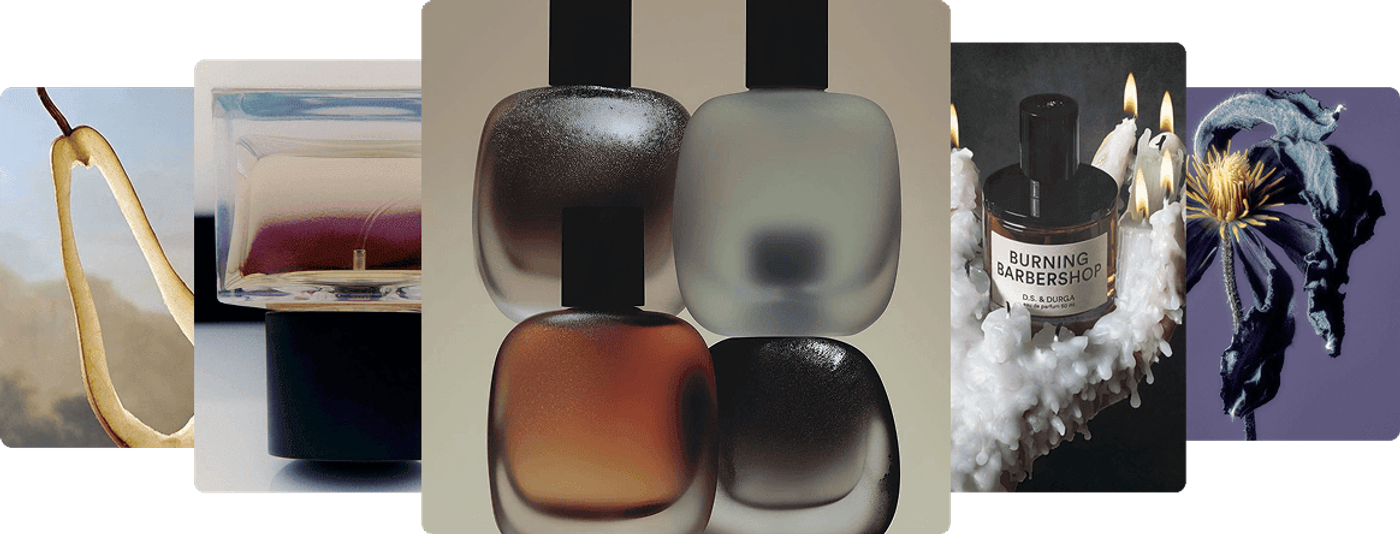
For a little while there, everyone smelled the same. Sniff around and Le Labo’s Santal 33 was everywhere — clouding every coffee shop, every boutique hotel, everywhere someone was working on a MacBook. The scent may be sandalwood, but it started to smell vanilla. So the next wave went niche: Clue Perfumery in Darien, Wisconsin, with a scent called Warm Bulb that smells like a hot dusty lightbulb; Imaginary Authors building fragrances around made-up novels; DedCool, Kismet, Marissa Zappas, Zoologist. These small perfumeries continue to go viral online, where most have to imagine the scent by the description. That’s how you end up with scents like dandelion butter, wet mushroom, empty library.
Of course, Comme des Garçons was mixing perfume to smell like gold back in 1994, or like a flower ripped apart and ironed flat; Demeter has been bottling Dirt, Snow, and Funeral Home since before most of its buyers were born. But the audience is spiking as the next generation would rather smell like a specific afternoon than like good taste in general — a rained-on campfire, their grandmother’s kitchen, something no one at the party could place. After all, each of our signatures is uniquely ours — why should our scents all smell the same?
- The niche market is set to double mass-market growth by 2032
- How Santal 33 became the smell of a decade
- Inside Clue Perfumery’s surreal Wisconsin scent lab
- Demeter’s “representational” scents, from Dirt to Funeral Home