ExploreSequenceShopCareers
Try
'vitsoe shelving'
Log in
Sign up

Sequence is read by 4 million creatives every week

Join Cosmos to get Sequence in your inbox

Get the app

© 2026

ConnectInstagramTikTokX
MoreTermsPrivacy

© 2026

CareersTermsPrivacy

May 26, 2026·Edition 26

The Louvre is getting an overhaul

Internet Microdoses

Gentle Monster is making smart glasses. Google unveiled the collab at I/O — audio glasses with Gemini built in, launching this fall after investing $100 million into the South Korean eyewear brand last year for a 4% stake. They’re making a Warby Parker version too, so every kind of glasses girlie is covered.

The steroid Olympics are here. In Las Vegas, the Enhanced Games pay athletes to use FDA-approved PEDs under doctor “supervision,” chasing million‑dollar records no federation will recognize. It’s truly just for the love of the game. (And for selling products.)

Google is ending traditional search as their homepage will now lead with AI-generated responses instead of search results. It’s part of the search giant’s broader push to put AI into everything. Instead of a single “I’m feeling lucky” button, they’re making it the whole experience.

Comedian Julio Torres made furniture about moving to New York, working with Sabai on All Other Passports — four pieces about arriving in New York, including a room dividerinspired by JFK Terminal 4 and a side table filled with things you dump when you get home. As anyone who’s seen Fantasmas knows, only Torres could dream up housewares this whimsical.

Selldorf Architects won the Louvre commission. STUDIOS Architecture and Selldorf Architects lead the museum’s biggest renovation in 40 years — two underground entrances, a dedicated room for the Mona Lisa, and the moat transformed into a garden.

More from Sequence

Why does everyone smell the same?
Edition 25 · May 19, 2026

Why does everyone smell the same?

The most copied kitchen of all time
Edition 24 · May 12, 2026

The most copied kitchen of all time

Aesthetic Study

Biomorphic Core

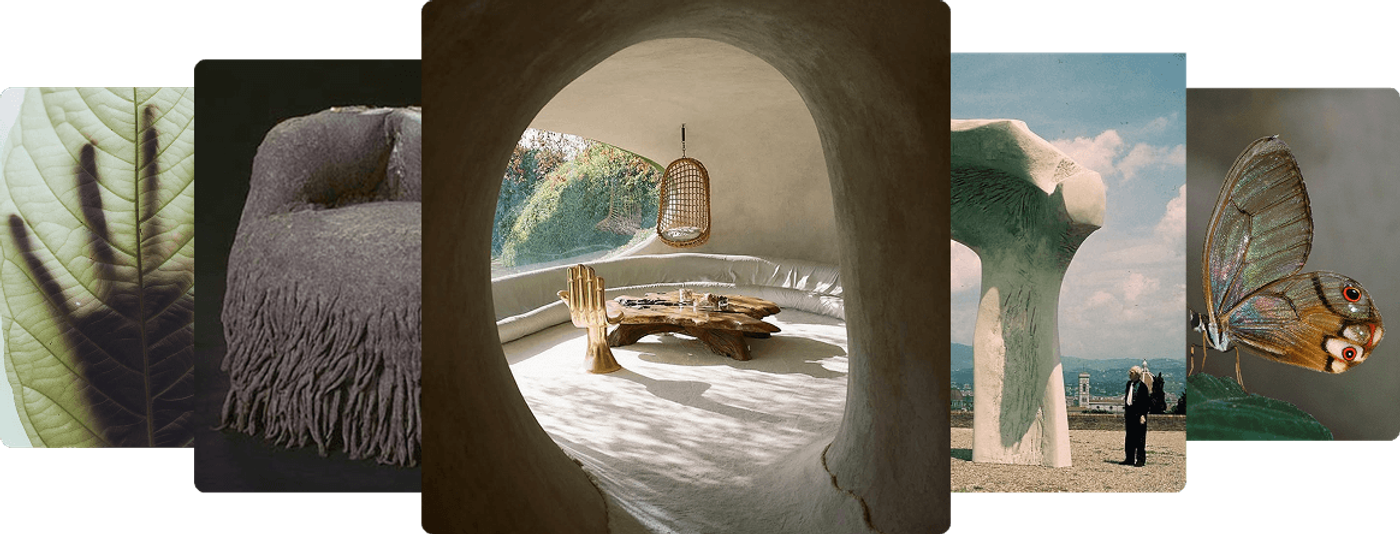
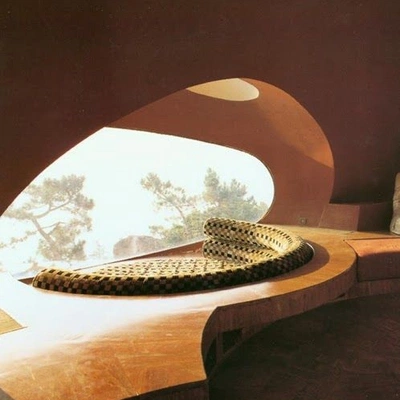
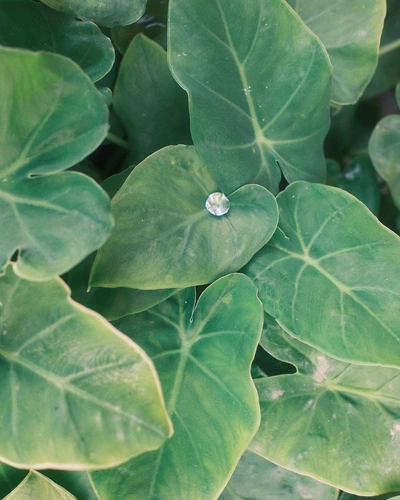
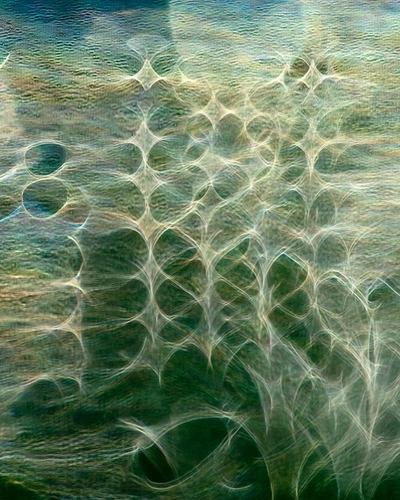
Before it was design, it could be seen in a sea creature. Ernst Haeckel's Art Forms in Nature — a 1904 collection of radiolarian and jellyfish illustrations so precise they look like blueprints — handed designers a visual language they're still working from. Gaudí built facades from bone structure and root systems. Marc Newson's Lockheed Lounge looks like a femur crossed with a spacecraft. Iris van Herpen's retrospective at the Brooklyn Museum makes the case that a dress can grow, looking less like clothes and more like coral mid-bloom.

These things look connected because, well, everything is. The brain responds to organic curves differently than it does to right angles. It’s deep in our DNA, having spent most of human history in forests and tide pools rather than office buildings. A chair that looks like a bone, a dress that looks like coral, a building with no corners: they all feel, on some level, like something you already know.

  • Gaudí's genius was transferring nature directly into architecture
  • No straight lines: the building that made parametricism click
  • Where biomorphic architecture comes from and where it's going
  • The dress that was literally grown from mushrooms
Cover of Biomorphic Core collection
Biomorphic CoreBy @sequencebycosmos
An image uploaded by 𝕭𝖑𝖚𝖒𝖊𝖓𝖍𝖆𝖚𝖘 on Jun 29, 2024.
An image uploaded by David Garland on Feb 06, 2024.
An image uploaded on Feb 13, 2024.

May 26, 2026·Interview

Fernando Mastrangelo

The artist who sculpts with sand, salt, and crushed glass on mastery, sleep, and the advice he wishes he'd never heard.

Fernando Mastrangelo

A moment with

Fernando Mastrangelo

The artist who sculpts with sand, salt, and crushed glass on mastery, sleep, and the advice he wishes he'd never heard.

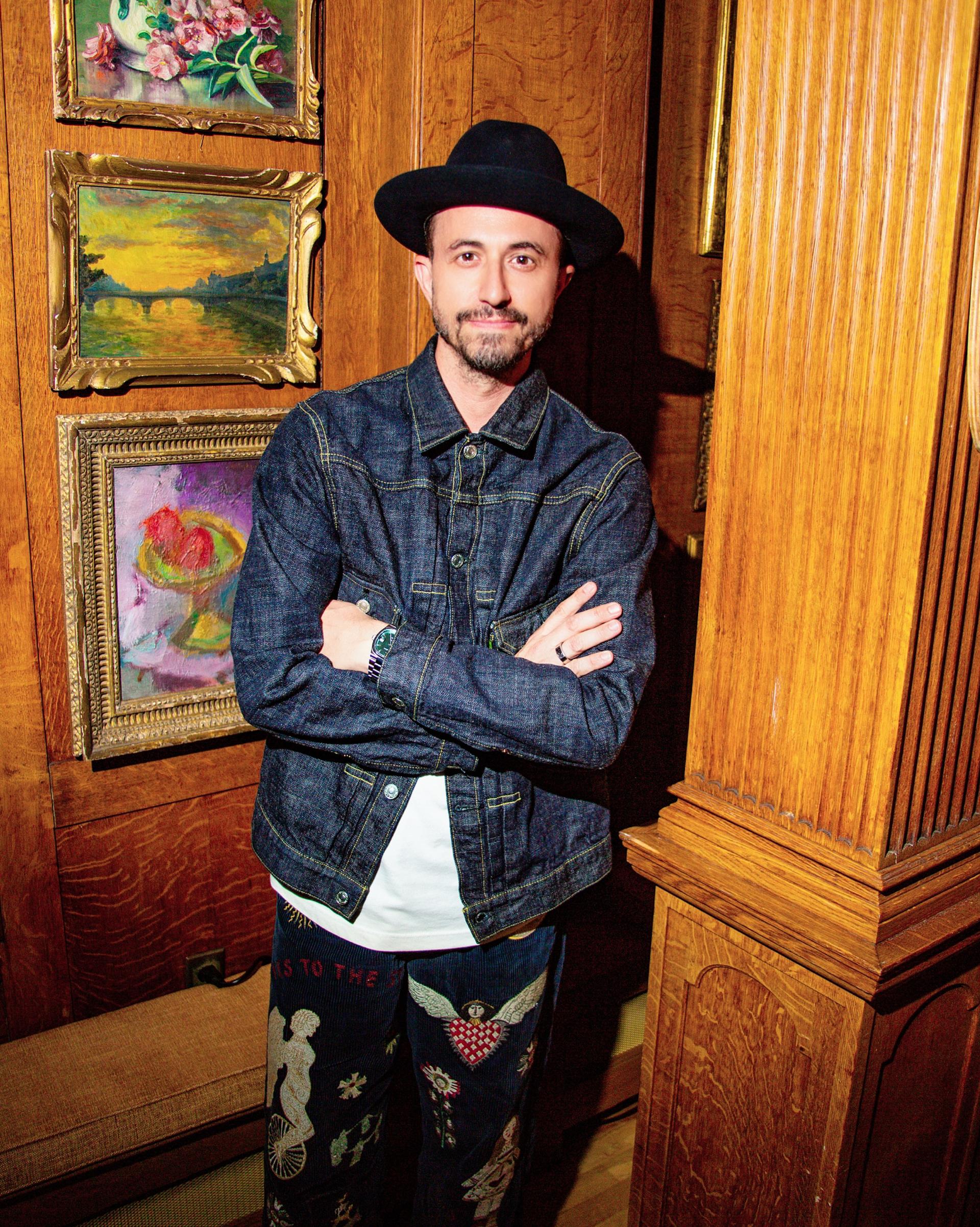
Fernando Mastrangelo has been making furniture and sculpture out of sand, salt, coffee grounds, and crushed glass since 2006 — the kind of pieces that end up at the Brooklyn Museum and Cooper Hewitt, and on the floors of Dior and Stella McCartney. He runs his studio out of Brooklyn and recently opened his own gallery in Manhattan. This fall he's back at Cristina Grajales Gallery for his first solo show in over five years, with new work shaped by a quieter chapter upstate. He's also recently relaunched Design Discord, his podcast about what it actually takes to build a design practice, with the second season already underway. We sat down with Fernando to talk mastery, sleep, and the advice he wishes he'd never heard.

What's the worst recommendation someone's given you?

"Make it more commercial." If I had followed that advice early on, I never would have poured coffee grounds into a mold and called it furniture. The work only resonates when it feels risky. The moment you design to fit neatly into the market, you lose the tension that makes it interesting.

What's the last film you watched that moved you deeply?

One film that's especially meaningful to me is Jiro Dreams of Sushi. I revisit it every year because I relate to its focus on lifelong mastery and relentless refinement. It reminds me that excellence isn't a destination, but a continuous process, no matter the field.

Where do you go to find peace?

At home with my wife and dog. We also love to travel to areas steeped in nature. A few days in a beautiful landscape can keep me refreshed and inspired in the studio for months.

What's the best investment (money, time, habit) you've made?

Sleep. I suffered from insomnia for a while, but after 18 months of radically changing my habits, and working diligently with a specialist, I now sleep like a champ and it's been a game changer.

Write us a fortune cookie message.

"Honor the material, and it will reveal its truth."

Find Fernando on Instagram and Cosmos.

Object Love

Wave UFO installation

Wave UFO installation

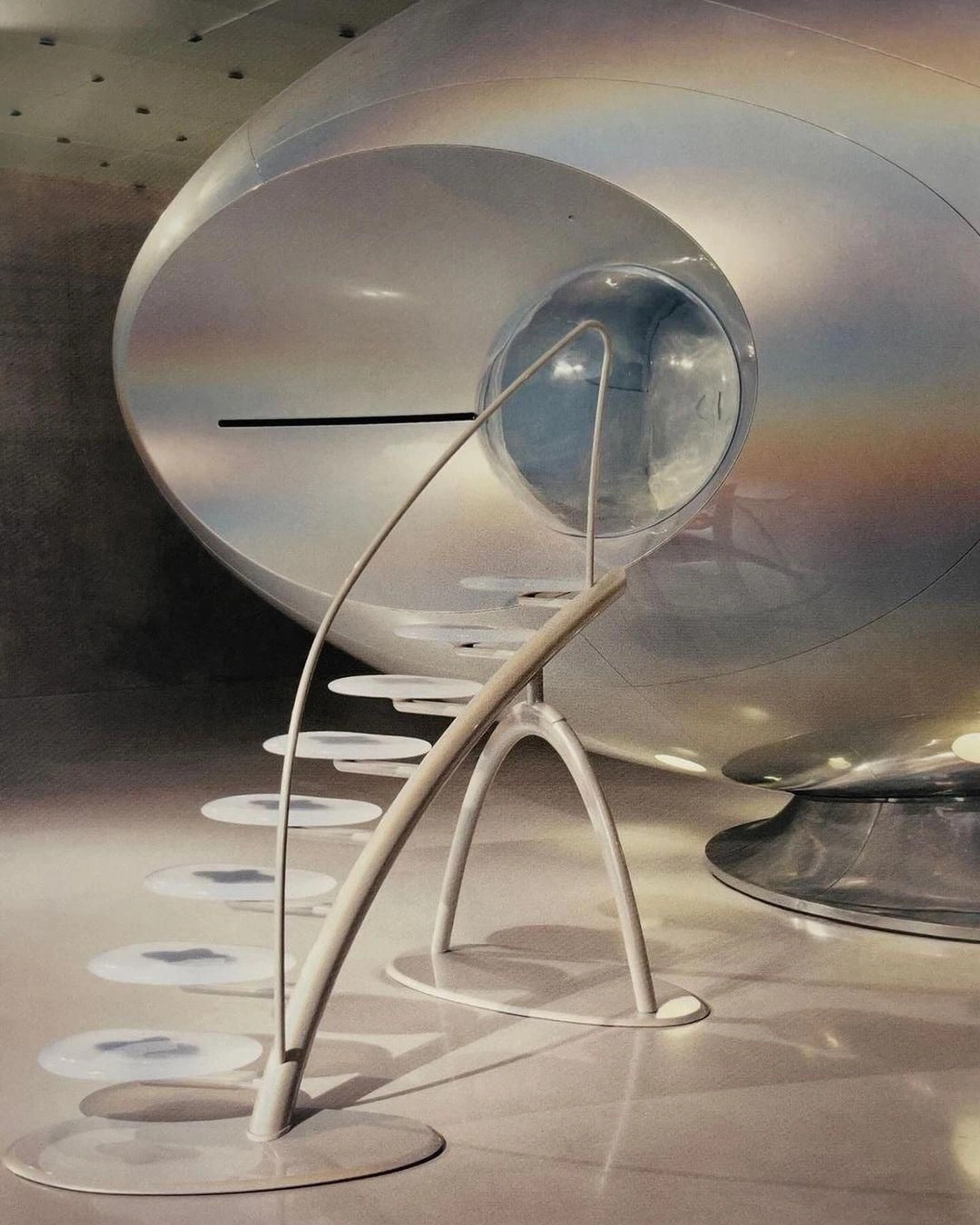
Mariko Mori's Wave UFO shows how people in the late 1990s imagined the future via a pearlescent, teardrop pod that carries three viewers at a time. Inside, electrodes attach to your head like an EEG, and your brainwaves get projected onto the domed ceiling as six colored orbs, two for each hemisphere of each person's brain. The Japanese artist spent three years building it from fiberglass, Technogel, carbon fiber, and magnesium, inspired by the automobile factories of Turin and the Buddhist principle that all consciousness is interconnected.

What's striking, watching it now, is how sincere it is. Wave UFO doesn't joke about UFOs or wink at sci-fi. It takes the shape completely seriously — as a vehicle, literal and spiritual, for an unfamiliar interior experience. You can find all the declassified government UFO files on Cosmos, but as far as we know this is the only one that asks you to lie down inside and look up at your own brain.

Quick Hits

  • Bad Bunny and Zara dropped a 150-piece collection.
  • Tilda Swinton is performing at the Guggenheim Bilbao.
  • London restaurant Sketch is doing a Winnie the Pooh takeover.
  • Merrell turned Union Square into an outdoor pop-up.
  • Fear of God launched an MLB collection for spring 2026.

In orbit,

Tania