November 17, 2026·Aesthetic Study
Aliens Exist
From Panton’s psychedelic interiors to Giger’s skeletal bar, why design is looking a little more alien.

For most of the 2010s, everything looked like it came out of the same mood board: a tidy sans-serif logo, millennial pink, a beige couch. Suddenly, searches for “aliencore” are up 80%, and the stuff in our feeds suggests the truth is out there. Glowing green glass lamps, spiky enamel rings, wraparound sunglasses with a warped logo.
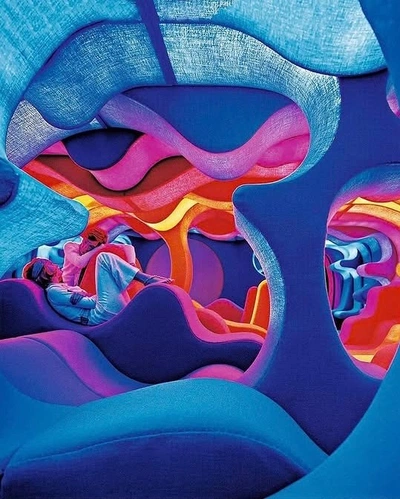
In 1970, the chemical company Bayer rented a boat during the Cologne furniture fair and hired the Danish designer Verner Panton to turn it into a showroom. He built Fantasy Landscape, a room of curving, organic shapes in saturated color. It looked like the inside of another planet, and it was there to sell synthetic materials.
Not all aliens want the same thing. Some want to survive. Others want to sell plastic. But most of them are just trying to find a way home.
The clean look didn't age well. Brent David Freaney, who designed the art for Charli XCX's Brat, called it "the Sweetgreenification of Manhattan." "Everything was designed to look like an app," he told the New York Times. Now, the Times says, that look "reeks of venture capital funding, or worse, artificial intelligence." As one creative director put it, "The worse it looks, the better it performs."
Panton would get it. For his 100th birthday, the Vitra Design Museum is showing a walk-in reconstruction of Fantasy Landscape until May 2027.
Some of the strangest shapes have practical roots. Joris Laarman's 2006 Bone Chair looks grown, but it was designed with car-parts software from Opel, then General Motors’ German subsidiary. The program copies how bones grow, putting the most material where there's the most stress.
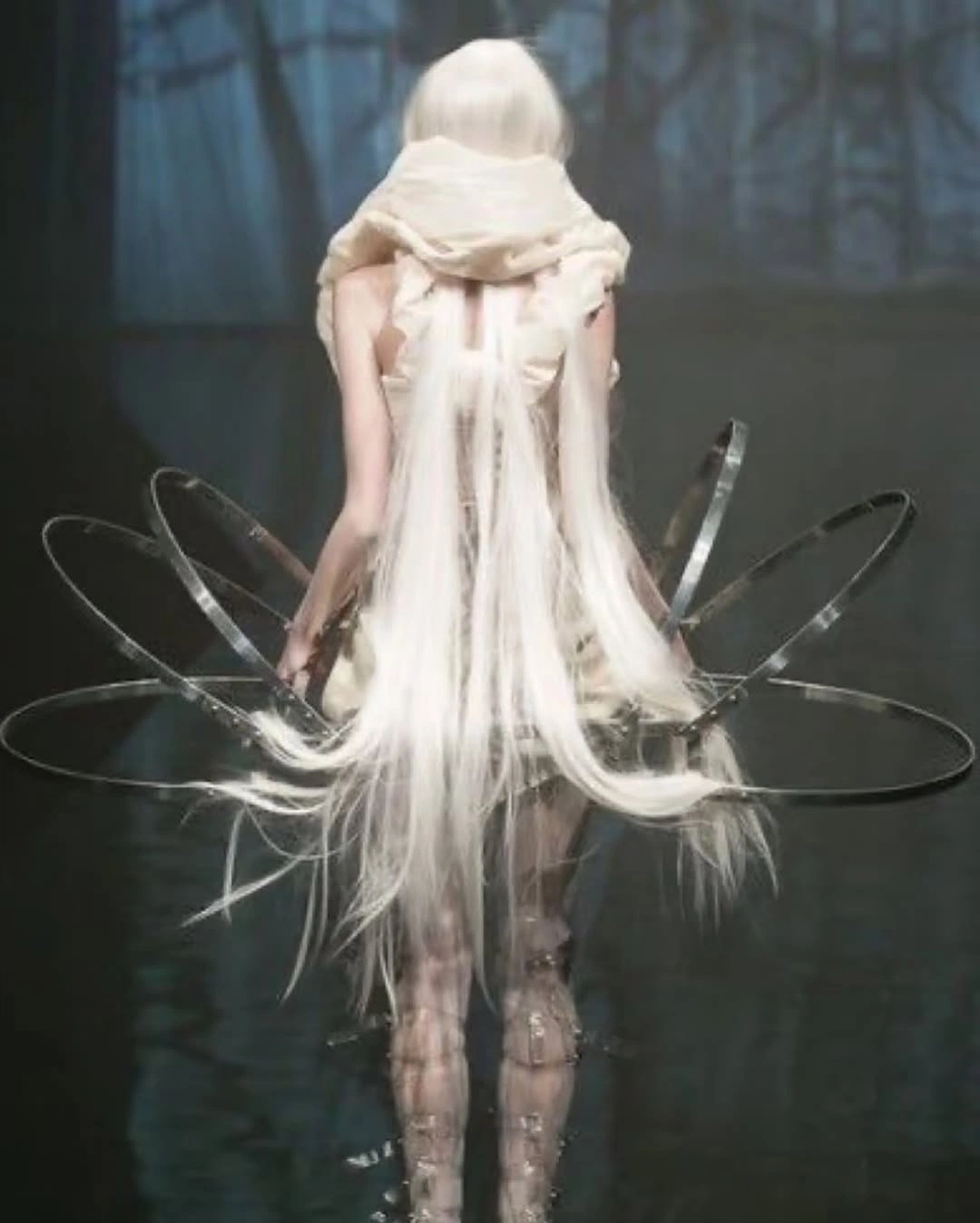
Fashion took the idea onto the body. Thierry Mugler's 1997 couture show, Les Insectes, was known for its "Fly" sunglasses, molded from a single piece of Plexiglas. Alexander McQueen's final runway show, Plato's Atlantis, imagined humans evolving to survive rising seas. Models wore face prosthetics and 25 cm "Alien" heels inspired by H.R. Giger.
Giger, who designed the creature in Alien, also built a bar. It opened in 2003 inside a 400-year-old castle in Gruyères, Switzerland, with vertebrae arching across the ceiling and chairs crowned with pelvic bones. They're called Harkonnen chairs.
Dune: Part Two looked to Giger again for Feyd-Rautha's costumes. Its production designer based the Harkonnen planet on black plastic septic tanks, partly because of "what's actually inside." The planet's outdoor scenes were shot in infrared, which is why everyone there looks so pale.
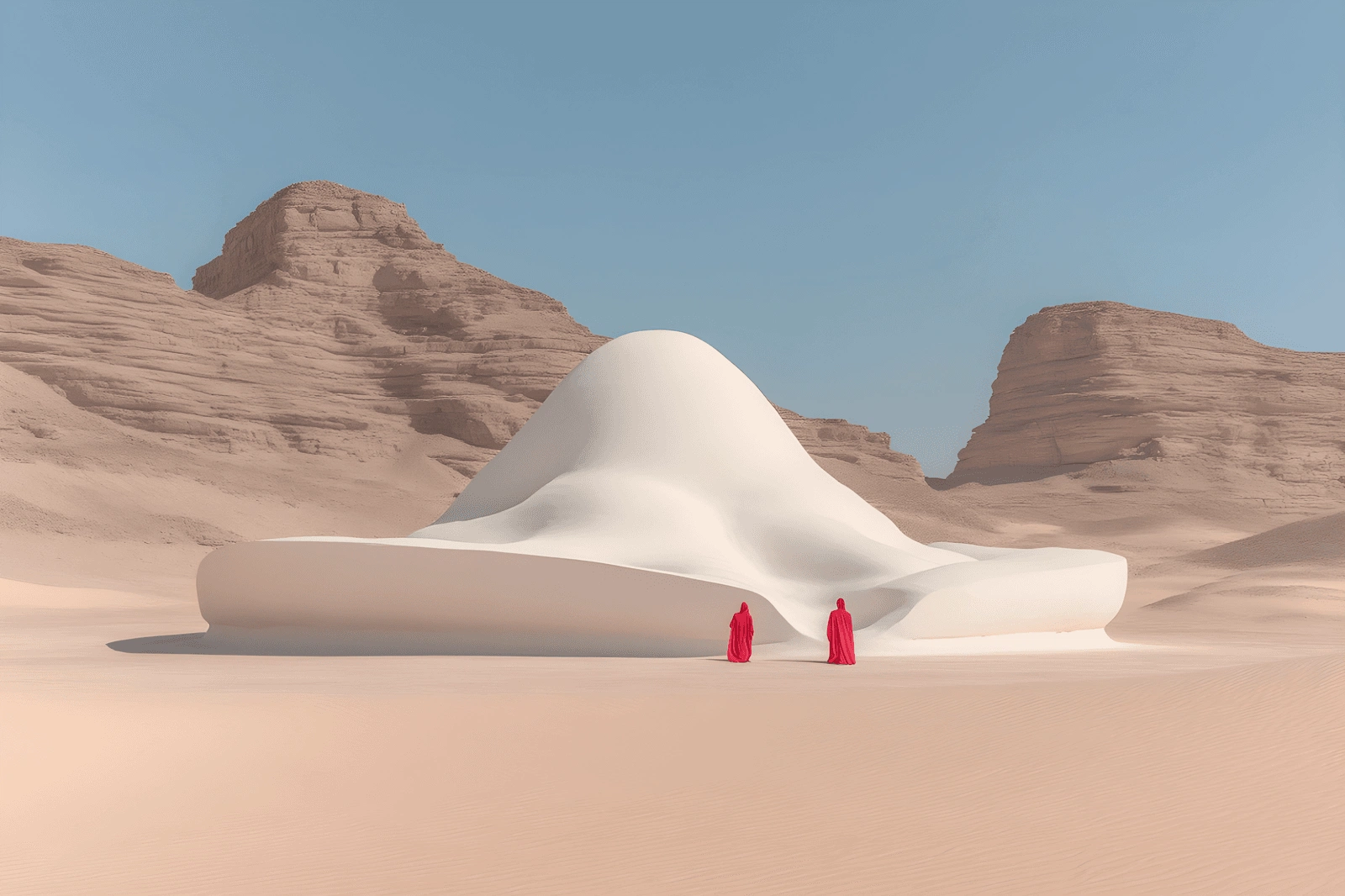
For some Arab artists, the alien means something closer to home. In Larissa Sansour's film A Space Exodus, she plays the first Palestinian in space: "a small step for a Palestinian, a giant leap for mankind." Kuwaiti artist Aseel AlYaqoub made a sculpture in the AlUla desert about desert varnish, a colorful mineral coating on rocks that has puzzled scientists for two centuries.
"For me, the alien was never something that needed to be invented or imported from science fiction," she told AD Middle East. "It was already here, embedded in the desert landscape, familiar in appearance yet fundamentally strange once examined closely."
Saudi designer Muotaz Abbas often uses AI, but he made his chair TR03 the hard way: 300 sheets of stainless steel, welded over eight months in Italy. It weighs 150 kg. He had it carried up a sand dune in the Riyadh desert, paid the crew triple, and still ended up helping.
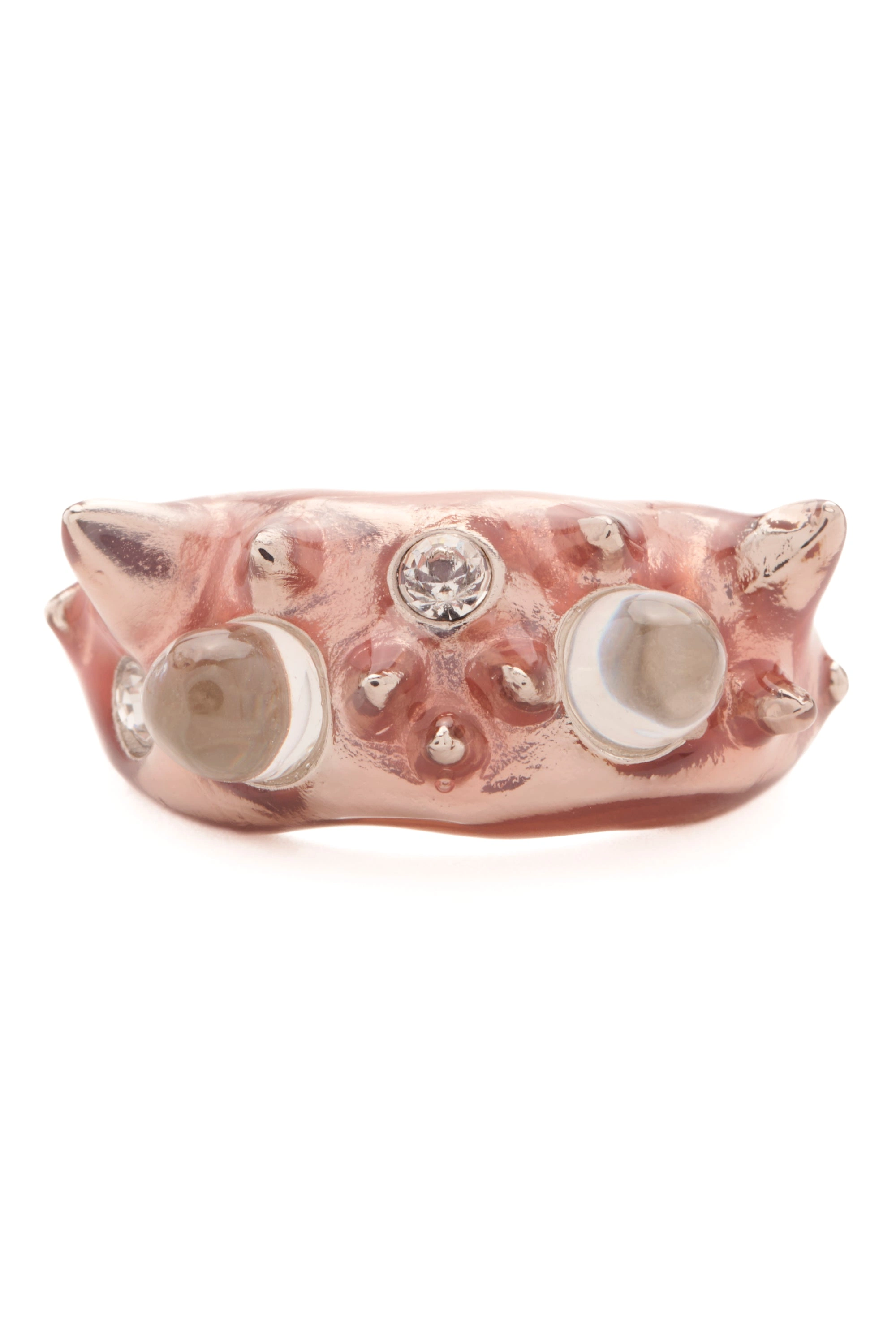
GRAU's Alien lamp is glowing green glass on polished aluminum, limited to 200. Collina Strada's Demi Alien ring is spiky, hand-enameled pewter. La Manso's acid-green Alien & Trapper ring was made, its listing says, "to commemorate and heal our inner rebel teenager."
We spent a decade trying to make everything look as clean as possible. Now, we're looking for something a little more out-there.
Further reading
- Why everything looks gloppy now
- The Arab artists who got there first
- Panton's Fantasy Landscape, rebuilt
- The chair designed like a bone
- A bar inside Giger's skeleton
- McQueen's underwater evolution
- Dune's villains live in septic tanks
- Hauling a 150 kg chair up a dune