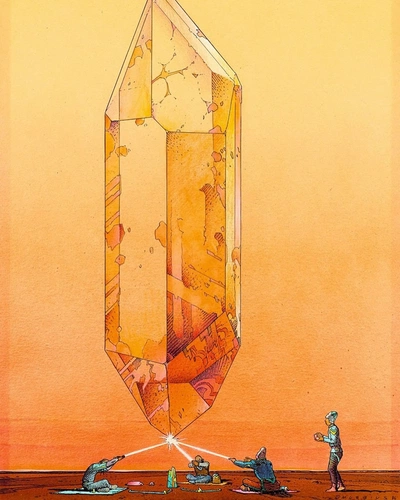
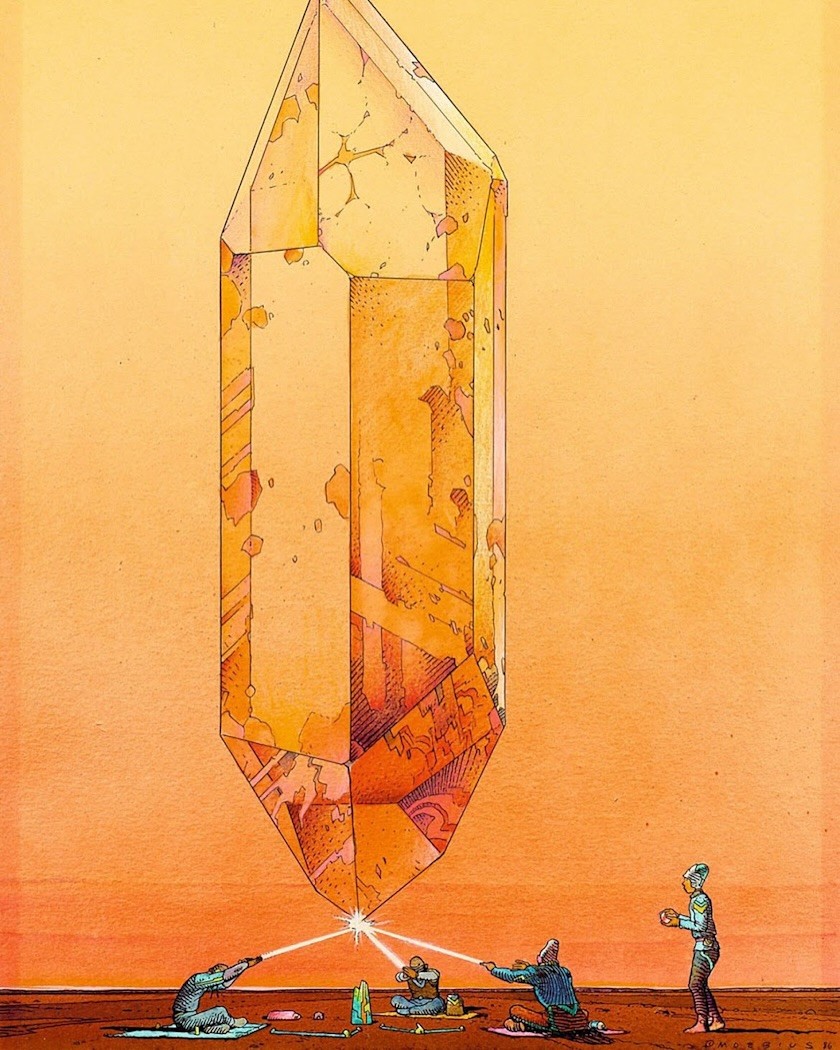
Jean Giraud, better known as Moebius, wasn’t just an artist. He was a world-builder, a cosmic cartographer mapping out realms so vivid, so strange, they felt like transmissions from another dimension. His linework had the looseness of a dream, the precision of an architect, and the effortless cool of a well-worn leather jacket. He made sci-fi feel like folklore, like stories whispered over a campfire on some distant planet. With The Incal, his collaboration with Alejandro Jodorowsky, he conjured up a psychedelic, metaphysical epic. A fever dream of neon deserts, godlike beings, and deep-space grit. And let’s not forget Arzach, the wordless saga of a lone warrior gliding over surreal landscapes on a pterodactyl-like steed. No captions, no explanations. Just pure visual storytelling that grabbed you by the gut and refused to let go. Moebius didn’t just influence comics. He rewired the very DNA of science fiction itself. You see his fingerprints everywhere—on Ridley Scott’s Alien, in the sprawling megacities of Blade Runner, in Miyazaki’s windswept fantasy worlds. Hell, even Tron owes him a drink. His work was both expansive and deeply personal, balancing cosmic vastness with human intimacy, like a monk chronicling the universe in the margins of a sacred text. He understood that sci-fi wasn’t about spaceships and laser guns. It was about wonder, about the eerie beauty of the unknown. And that’s the thing about Moebius. He didn’t just take you to other worlds. He made you believe they were real. Moebius’ studio IG: @moebius_production
06 Connections
- Go to cluster
 Energy615 elements@magpi
 - Go to cluster
 spaceships50 elements@adriger
 - Go to clustersyenite80 elements@absenceofechoes
- Go to clusterZorya30 elements@thetagi
- Go to clustercrystals14 elements@muchomuerte
- Go to cluster
 SciFiFantasy06 elements@earthbasedhuman